
Transition Period
Cows & Buffaloes
Post-Calving Feed Guide for Dairy Animals
Updated 26 Aug 2026 • By Falah Nutrition Desk, Animal Nutrition Advisor
The first 21 days after calving are the most dangerous period in a dairy animal's life. Milk production shoots up while appetite is still low - the animal burns its own body reserves, risking ketosis, weakness and future breeding failure. Correct post-calving feeding protects the animal and unlocks peak milk.
Common Signs
- Animal has just calved (day 0 to 21)
- Eating less than expected while milk increases daily
- Rapid weight loss after calving
- In problem cases: sweet-smelling breath, dullness (possible ketosis)
Possible Causes
- Post-calving problems happen when: the animal is pushed to full milking ration too fast or too slow
- Low-energy feed cannot match milk output
- No transition feed was given before calving
- Water and fresh feed not offered immediately after calving
What the Farmer Should Check
- Is the animal eating with appetite?
- Is milk increasing day by day as expected?
- Any smell of acetone (nail-polish-like) in breath or urine?
- Did the placenta drop normally?
- Is the animal getting warm water and fresh feed right after calving?
Feed Guidance
Feed Goka Transition +21 at 4-8 kg/day for the first 20 days after calving, adjusted to the animal's strength and appetite. It is a high-energy formulation designed to fight negative energy balance and ketosis - no jaggery, oil or porridge needed. From day 21 onwards, shift gradually to the milking feed matched to actual production (for example Goka Amrit for high producers). Keep increasing feed as milk rises, following the 1 kg per 2.5 liters plus 1 kg maintenance rule.
Relevant GOKA Products
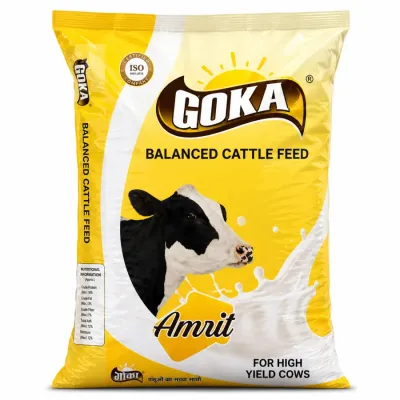
High Milk-Yielding Cows & Buffaloes
More than 25 liters/day
High TDN feed for fresh & heavy milkers
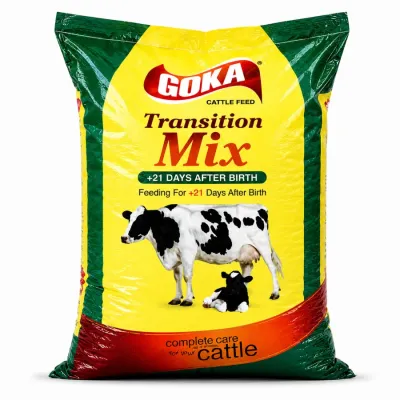
Fresh Lactating Cows & Buffaloes
Protects fresh animals from ketosis & weakness
When to Contact a Veterinary Doctor
For serious symptoms, consult a qualified veterinary doctor. Feed support can help overall nutrition and recovery but should not replace veterinary treatment.
Get Feed Guidance from Falah Enterprises
Free, personal guidance for your animal - tell us the details on WhatsApp or call us.