
Milk Production
Cows & Buffaloes
How to Increase Milk Production in Cows and Buffaloes
Updated 26 Aug 2026 • By Falah Nutrition Desk, Animal Nutrition Advisor
Every dairy farmer wants more milk from their animals. Milk production depends on three things working together: genetics, health, and most importantly - daily nutrition. The good news is that nutrition is the one thing fully in your control. With the right balanced feed in the right quantity, most cows and buffaloes can produce significantly more milk than they currently do.
Common Signs
- Animal produces less milk than expected for its breed
- Milk yield drops after a few weeks of calving
- Animal eats only dry fodder or unbalanced home mixtures
- Thin body condition with visible ribs
- Low milk fat and SNF reported at collection center
Possible Causes
- Feed quantity not matched to milk production level
- Low energy and protein in home-mixed feed
- No mineral and vitamin supplementation
- Irregular feeding times
- Poor quality or moldy fodder
- Water shortage - milk is 87% water
What the Farmer Should Check
- Is the animal getting 1 kg of compound feed for every 2.5 liters of milk, plus 1 kg extra for body maintenance?
- Is clean water available 24 hours?
- Is green fodder included along with dry fodder?
- Is the animal eating eagerly or leaving feed?
- Is deworming done regularly as per vet advice?
Feed Guidance
Follow the golden rule: 1 kg of balanced compound feed for every 2.5 liters of milk produced, plus 1 kg extra for body maintenance. Example: a cow giving 15 liters needs about 7 kg feed per day, split into morning and evening. Use a feed matched to your animal's production level - a 10-liter cow and a 25-liter cow need very different feeds. Increase feed gradually over 7-10 days, never suddenly. Keep feeding times fixed every day, and ensure free access to clean water.
Relevant GOKA Products

Dairy Cows & Buffaloes
Cows 20-25 L/day, Buffaloes 12-15 L/day
Bypass protein power for high yielders
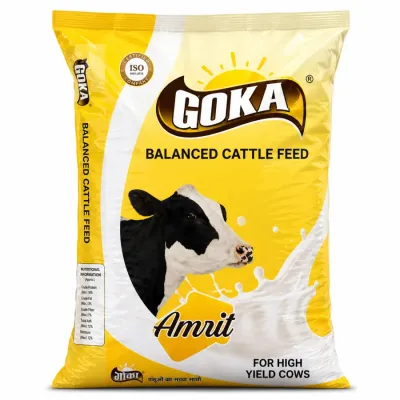
High Milk-Yielding Cows & Buffaloes
More than 25 liters/day
High TDN feed for fresh & heavy milkers

Dairy Cows & Buffaloes
15-22 liters/day
Peak milk with high FAT & SNF

Dairy Cows & Buffaloes
12-18 liters/day
NDF-rich feed for healthy digestion

Dairy Cows & Buffaloes
10-15 liters/day
Maintains milk fat, prevents repeat breeding
When to Contact a Veterinary Doctor
For serious symptoms, consult a qualified veterinary doctor. Feed support can help overall nutrition and recovery but should not replace veterinary treatment.
Get Feed Guidance from Falah Enterprises
Free, personal guidance for your animal - tell us the details on WhatsApp or call us.